FunTime Mix
- 3.4
- Rating
- 5.00M
- Installs
- Free
- Price

 Analysis by App-foxy
FunTime Mix is a music game from Jingmao Tec that immediately presents itself as a light, casual way to spend a few spare minutes. Its space-themed identity gives it a playful frame, but the important question is whether the moment-to-moment interaction feels satisfying enough to bring me back after the first try. In my experience, that answer depends heavily on what I want from a music game: quick entertainment and a simple feedback loop work well here, while deep rhythm training or a large, carefully curated music library would send me elsewhere.
The game is free to start, carries a Teen content rating, and works on devices running Android 7.0 or later. It has reached over five million installs, which makes it more than an obscure experiment, although its average rating of 3.3 from around 5.9 thousand ratings suggests that players have had mixed experiences. I think that middle-ground reputation is useful context. This is not a title I would recommend blindly to every music-game fan, but it can fit nicely into a short break when you want something more interactive than simply pressing play on a song.
How the first action sets up the music-game loop
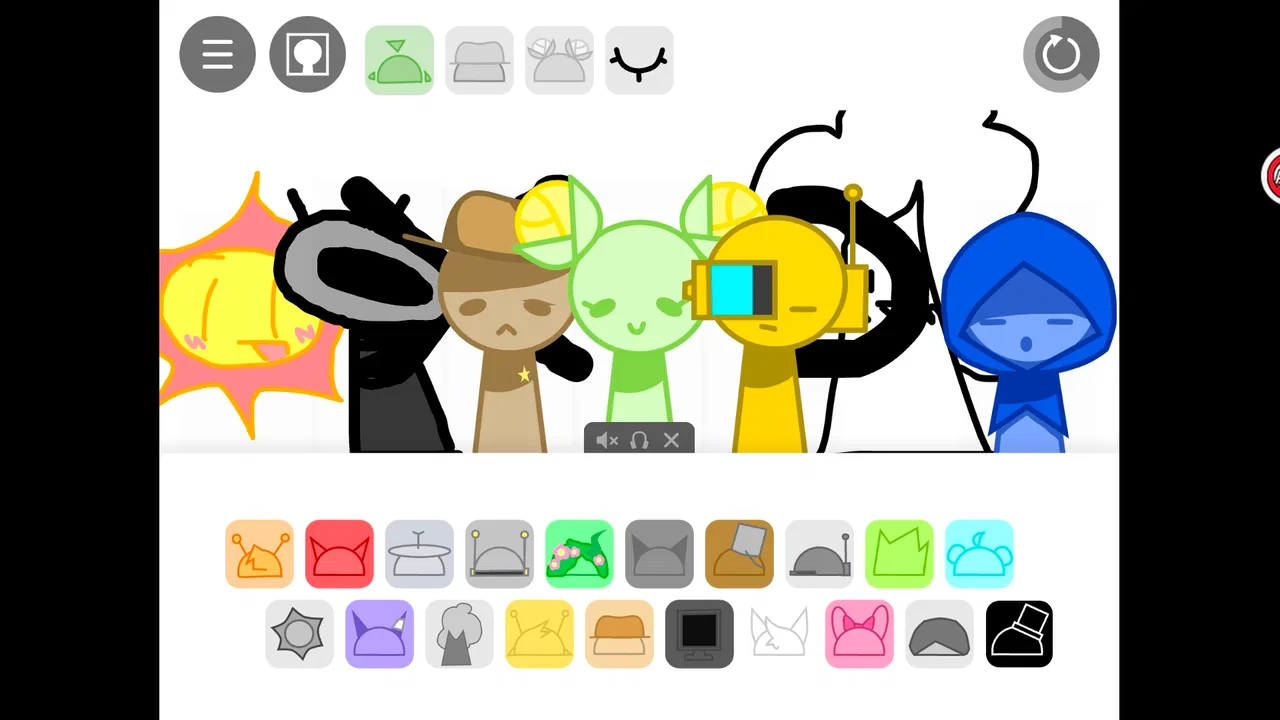
The first thing I look for in a game like this is whether the opening interaction teaches me what matters without making me study a manual. FunTime Mix is built around the idea of mixing and responding to musical activity in a playful space setting. That makes the first action feel approachable: you are not entering a complicated simulation with a long list of controls. You are trying to understand the relationship between what you do, what appears on screen, and how the music responds.
You May Also Like

 Blood Strike: 2.5 Anniversary
Blood Strike’s Loadouts Turn Every Drop Into a Tactical Gamble
A close look at Blood Strike’s custom loadouts: how fast access to signature weapons reshapes its battle royale rhythm, rewards preparation, and narrows the gap between fights.

 Pandora - Music & Podcasts
Pandora’s Music Is Easy to Start, but Harder to Recover
Pandora’s strength is its low-effort path from a seed to a station. Its weak spot is how much confidence it asks you to place in connection, setup, and quiet recovery.

 8 Ball Pool
 Is Built on Rivalries, Rematches, and Routine
A close look at the rivalries, rematches, shared routines, and unanswered safety questions that turn a quick pool match into a persistent mobile community.

 Samsung Music
’s Quiet Strength Is Playing What You Already Own
Its reach comes less from spectacle than from dependable access to a personal library. That simplicity is both the app’s strongest retention engine and its ceiling.

 AccuWeather: Weather Radar
AccuWeather Review: A Quick, Clear Forecast for Everyday Decisions
For everyday plans, the best forecast is the one you can understand quickly. AccuWeather makes rain timing, radar, and local conditions easy to act on, with a few trade-offs.

 Hill Climb Racing
Why Hill Climb Racing Still Turns Crashes Into One More Run
A tiny car, a bumpy hill and one more upgrade: Hill Climb Racing keeps resurfacing because its simple chaos makes every near-miss feel personal.
More From Our News Desk



That simplicity is one of its strongest qualities. I can imagine opening it while waiting for a bus, taking a short break between tasks, or looking for something that does not demand the concentration of a competitive action game. The basic appeal is immediate because the game connects an input with an audiovisual response. Even when the challenge is modest, that connection gives the player a reason to try again rather than merely watch a passive animation.
At the same time, players should adjust their expectations. The store summary describes a space music box, and that wording points toward a playful toy-like experience rather than a full music-production workstation. I would not install it expecting the editing depth of a dedicated beat-making application, the precision of a serious rhythm trainer, or the broad song catalog associated with established rhythm games. FunTime Mix is better understood as a compact game built around musical interaction.
The first useful tip is to approach the opening session as a learning pass rather than trying to maximize performance immediately. Pay attention to which visual changes follow your action and whether the game rewards timing, selection, repetition, or simply experimentation. That small change in mindset matters because the title’s charm comes from discovering its response pattern. If you rush through the opening while expecting a conventional score-chasing rhythm game, you may miss what the developers are actually trying to make enjoyable.
Why the feedback rhythm matters more than complexity
A music game lives or dies by its feedback rhythm: action, reaction, reward, and the temptation to repeat the sequence. FunTime Mix works best when those parts arrive close together. I press or choose something, the screen and sound acknowledge it, and I receive enough encouragement to continue. That short distance between input and response is what makes a simple interaction feel like a game instead of a menu.
The audio-visual relationship also gives the space theme a practical purpose. It creates a setting for the musical activity, so the screen does not feel like an empty control panel. For younger players and casual users, that atmosphere can be more inviting than a stark interface filled with technical controls. The Teen rating is still worth keeping in mind for families, but the game’s broad presentation is clearly aimed at accessible entertainment rather than specialist musicians.
Where the experience can feel limited is in the depth of the feedback. A player who wants increasingly exact timing windows, detailed performance breakdowns, or a demanding progression system may find the loop too gentle. That is not automatically a flaw; it is a question of purpose. A relaxed music toy should not be judged by the same standard as a precision rhythm title. Still, the distinction is important before downloading, because the free entry point may attract players whose expectations are more ambitious than the design can satisfy.
I also recommend playing with headphones when the surroundings are noisy, not because the game becomes a professional audio tool, but because musical feedback is easier to understand when it is not competing with traffic, conversation, or television. In a quiet room, the visual response may be enough. In a busy environment, sound can become the part that tells you whether an action landed as intended. This is a small practical adjustment, but it makes the feedback loop easier to read.
The reward is the reason a second session begins
The reward in FunTime Mix is less about a single dramatic victory and more about seeing the musical scene develop through your participation. That kind of reward suits short sessions. I do not need to commit to a long campaign before feeling that I have done something. A few actions can create a complete little moment, and that sense of completion is valuable when I only have a few minutes available.
The strongest use case is therefore not a long evening of focused gaming. It is the in-between moment: after finishing a task, while waiting for an appointment, or when I want a quick change of pace without learning a complex control system. The game can act as a small interactive reset for my attention. Its music-centered presentation gives the break more character than a generic puzzle, while its casual structure avoids the pressure of a ranked match.
However, the reward loop may not be enough for everyone. If you need a clear long-term target, a robust collection system, or a strong competitive ladder, you should compare this with a more established rhythm game before committing your time. FunTime Mix can provide a pleasant repeatable activity, but I would not treat it as a replacement for a serious practice tool or a deep music-creation app. Its value comes from immediacy, not from becoming an expert musician.
There is also a sensible way to test whether the reward works for you: play one short session, close the game, and ask whether you remember a specific interaction you want to try differently. If the answer is yes, the loop has probably found its audience in you. If you only remember tapping through screens without caring about the result, the title may not have enough texture for your preferences. That is a more useful test than judging it by the space artwork alone.
The game is free, which lowers the risk of trying it. Optional purchases cost $4.99 per item, so I would treat them as a decision to make only after understanding how much I actually use the game. A free download is not the same as an unlimited commitment-free experience, and players who dislike in-app spending should be especially deliberate about whether any optional purchase adds enough value to justify it. I would begin with the basic experience and avoid paying simply because the game makes a session feel pleasant.
What happens when a session resets
The reset is an important part of this kind of design. A good casual music game lets me finish a small attempt without making the next start feel like a chore. FunTime Mix benefits from that short-cycle structure because I can leave after a brief interaction and return later without needing to remember a complicated strategy. That makes it suitable for fragmented time, which is how many people actually play on a phone.
The trade-off is that a quick reset can also make the experience feel disposable. If the game does not give me a strong reason to build toward a larger goal, each session may begin to resemble the last one. This is where the difference between a music box and a full game becomes most noticeable. A music box invites repeated tinkering for its own sake; a conventional game usually needs progression, challenge, or collection to keep the loop growing.
For me, the best approach is to give each session a tiny purpose. Instead of opening it with the vague expectation of being entertained indefinitely, I might try to explore a different interaction, create a more satisfying sequence, or simply use it as a two-minute break. That makes the reset feel intentional. It also prevents the common mistake of measuring a casual title by how many hours it can occupy, when its real strength may be how well it fills a small gap.
Device compatibility is reasonably broad because the game supports Android 7.0 and newer. That makes it accessible to people who are not using the latest phone, although actual smoothness can still vary with hardware and background activity. I would close demanding apps before playing on an older device, especially if the visual effects or audio response feel delayed. In a music-focused game, even a small delay can make the connection between action and feedback feel less natural.
The current version is 1.3.8, so I would keep the app updated through the normal store process rather than judging it from an older installation. Updates can affect stability and feel, and a music game is particularly sensitive to timing and responsiveness. I would also check the Teen rating before handing it to a younger player. Parents should make that decision themselves instead of assuming that a colorful space theme automatically means the game is suitable for children.
Who should choose it, and who should skip it
I would recommend FunTime Mix to someone who enjoys casual music interactions, likes playful space presentation, and wants a game that can be opened without a long preparation period. It is a reasonable choice for short breaks, relaxed experimentation, and players who prefer audiovisual feedback over complicated menus. The free starting point makes it easy to test whether the central loop feels rewarding enough for personal use.
I would be more cautious about recommending it to someone who wants strict rhythm accuracy, a substantial music library, advanced composition tools, or a demanding progression structure. In those cases, a dedicated rhythm game is likely to offer clearer performance goals, while a music-making application will provide more control over arranging and editing. FunTime Mix sits between those categories: it borrows the pleasure of making musical choices without presenting itself as a professional studio or a highly competitive sport.
Another practical trade-off concerns attention span. If you dislike repeating compact actions simply to see another audiovisual response, the reset loop may become repetitive quickly. On the other hand, that same repetition is exactly what makes it comfortable for casual play. I would not call the game universally addictive or endlessly deep; I would call it easy to revisit when I want a small, self-contained diversion.
Its reception reflects that middle position. With an average rating of 3.3 and roughly 360 written reviews, the public response is neither a clear endorsement nor an outright rejection. I read that as a reason to try it with modest expectations. The game may click with players who value its light musical atmosphere, while others may find the interaction too limited or the overall loop insufficiently ambitious.
My verdict on the complete action-to-reset loop
After looking at the full cycle, I see FunTime Mix as a compact music game whose appeal depends on the pleasure of immediate response. The action is approachable, the feedback gives the screen and sound a purpose, the reward arrives quickly, and the reset makes another short session easy to begin. That is a coherent design for casual use. It does not need to imitate a professional music tool to be enjoyable, but it does need to satisfy players who want more than a novelty.
My honest recommendation is to download it if you want a free, space-themed musical diversion and are comfortable treating each session as a small experiment. Start without spending money, use headphones when you need clearer feedback, and judge the game by whether you feel curious about trying one more interaction. Those three steps will tell you more than the promotional wording can.
I would skip it if your main goal is deep rhythm mastery, serious composition, or a long progression journey. For that audience, the usual alternatives in music gaming will probably offer more precise challenge and stronger long-term structure. For everyone else, especially people who enjoy short bursts of playful interaction, the game has a clear niche. Its best quality is the tight little loop between doing something, hearing and seeing a response, and wanting to test the next variation.
Developed by Jingmao Tec, FunTime Mix is not a game I would describe as essential, but it is specific enough to be more than a generic time filler. The space-music-box idea gives its casual interactions an identity, while the free entry point lets each player decide whether that identity is enough. I would recommend it as a low-commitment experiment, not as a replacement for a full rhythm game or music workstation.
FAQs for FunTime Mix
01What is FunTime Mix, and what can I do with it?
FunTime Mix is a dynamic app designed to offer a diverse collection of mini-games and interactive challenges suitable for all ages. Users can enjoy puzzles, action games, and educational activities, all within a single platform. The app is perfect for quick entertainment sessions or longer gaming marathons, providing endless fun and engagement.
02Is FunTime Mix free to download and use?
FunTime Mix is available as a free download on both Android and iOS platforms. While the app provides a variety of free games, it also offers in-app purchases and a premium subscription option for users who want to unlock additional features and exclusive content. Be sure to check the app for any potential costs.
03What are the system requirements for installing FunTime Mix?
To install FunTime Mix, your device must run on Android 5.0 or iOS 11.0 and above. Ensure you have adequate storage space and a stable internet connection for downloading and updating the app. Regular updates may require additional space to accommodate new features and improvements.
04Does FunTime Mix offer any parental controls?
Yes, FunTime Mix includes parental control features to ensure a safe and suitable gaming environment for younger players. Parents can set time limits, restrict certain types of content, and monitor their child's activity within the app. This feature provides peace of mind for parents while their children enjoy the games.
05How do I report a bug or issue in FunTime Mix?
If you encounter any bugs or issues while using FunTime Mix, you can report them directly through the app's support section. Navigate to the 'Help' or 'Support' menu and submit a detailed description of the problem. The development team is responsive and regularly addresses user feedback to enhance the app experience.
Pros
- Intuitive user interface that's easy to navigate.
- Wide variety of games to suit all ages.
- Regular updates with new features.
- Minimal ads for an uninterrupted experience.
- Offline mode available for playing without data.
Cons
- Some games require in-app purchases.
- Occasional bugs in older devices.
- Limited multiplayer options.
- Heavy on battery usage during extended play.
- No parental controls for younger users.

FunTime Mix
Gallery